
With soil conditions changing and foundation issues more prevalent in residential and commercial construction, helical piers are an integral part of today’s structural engineering. In areas where expansive soils or water tables can be a challenge, these helical anchor systems offer a dependable and least invasive way to reinforce existing foundations. If you are thinking of helical piers in Davenport, learning their benefits and installation method can give you peace of mind and added value for years to come.
Helical Piers Are Becoming the Foundation Repair Solution of Choice
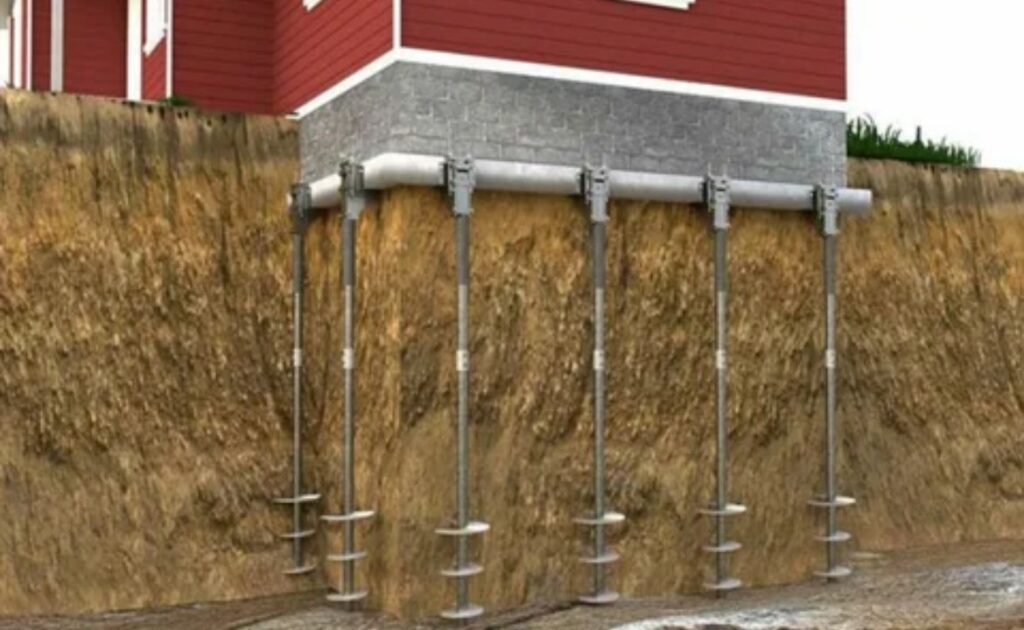
The helical piers, also called screw piles, are steel shafts with helical blades that can be twisted into the ground like a giant screw. They are often used as foundations for buildings or to fix weak foundations.
Key Advantages:
– Adaptability to soil types: They grow well in different types of soil, such as clay or sandy soil, and even in areas with high groundwater.
– Immediate load-bearing capability: Where concrete piers need to cure for a period of time, you won’t have that issue with helical piers.
– Minimal disruption: Installation is easier to everything tends to be fewer excavations and equipment, and causes less damage to your landscaping and nearby buildings.
– Precision placement: The torque resistance can be used by engineers to measure the installation progress of the pier to a point where it can support the load sufficiently.
When to Use Helical Piers
When you are in need of helical piers in Davenport, the list is endless.
Common Applications:
– Foundation Settling or Cracks: Helical piers are used to stabilize homes and buildings that are settling.
– New Construction on Poor Soil: Piers are used where you want to build on expansive or questionable soil to prevent future structural issues.
– Decks, Patios, and Additions: The stabilizing effect helical piers offer is advantageous to light structures as well.
Installation Process
The installation process is simple yet requires careful precision to ensure lasting results
Steps Involved:
– Site Evaluation: Then the soil and the supposed load demands are evaluated by a structural engineer.
– Pier Installation: Hydraulic drive head spins pier down until it is at the correct depth.
– Bracket Attachment: A steel bracket is attached to the foundation or other structural member, transferring the load to the piers.
– Load Testing: The system is also challenged to ensure it meets load requirements.
Conclusion
With quick installation, substantial load-bearing capacity, and the ability to work in almost any soil conditions, it’s no wonder helical piers in Davenport are now the most widely used method to solve foundation problems. Whether you’re stabilizing ailing infrastructure or preventing future movement during a new build, helical piers provide a long-term, minimally-disturbative solution based on proven engineering theory. For both homeowners and contractors, investment in this technology can significantly reduce the expense of potential structural damage and offer long-term peace of mind.