
Choosing how to dress your walls is one of the most impactful decisions you can make in interior design. It sets the tone, defines the atmosphere, and serves as the canvas for your entire home. For decades, the choice was simple: what color of paint? But today, a stunning contender has entered the ring, capturing the hearts of designers and homeowners alike: watercolor wallpaper.
The age-old debate of wallpaper vs. paint has been revitalized with this artistic and expressive option. If you find yourself torn between the timeless reliability of a paint can and the dreamy allure of a watercolor pattern, you’re in the right place. This guide will break down everything you need to know about watercolor wallpaper and traditional paint, helping you decide which is the perfect choice for your space.
The Allure of Art: Understanding Watercolor Wallpaper
Before we dive into a direct comparison, let’s appreciate what makes this wall covering so special. It’s not just about color or pattern; it’s about bringing a piece of art to life on a grand scale.
What is Watercolor Wallpaper?
As the name suggests, watercolor wallpaper is a type of wall covering designed to mimic the delicate, fluid, and often translucent effects of a watercolor painting. Instead of sharp, defined lines, you get soft gradients, beautiful color bleeds, and an ethereal quality that feels both organic and sophisticated. This style can range from subtle, pastel washes that add a hint of color to bold, abstract florals and landscapes that command attention. It’s the perfect way to infuse personality and a bespoke artistic feel into a room.
Types of Watercolor Wallpaper
The world of watercolor wallpaper for walls is diverse, offering options for every skill level and commitment preference.
· Traditional Wallpaper: This is the classic, high-quality option that requires a separate adhesive or paste to apply to the wall. It’s known for its durability and rich textures. While the application is more involved, the results are often seamless and long-lasting.
· Peel and Stick Wallpaper: A game-changer for DIY enthusiasts and renters. Watercolor peel and stick wallpaper comes with a self-adhesive backing, much like a large sticker. It’s significantly easier to apply, reposition, and, most importantly, remove without damaging the walls. This makes it ideal for those who love to change their decor frequently or can’t make permanent alterations to their home.
· Mural Wallpaper: This is where watercolor designs truly shine. Instead of a repeating pattern, a watercolor mural wallpaper is a single, large-scale image that spans an entire wall. Think of a misty mountain range behind your sofa or a cascade of giant, soft-petaled flowers in your bedroom. Watercolor wall murals transform a wall from a simple surface into a breathtaking focal point.
The Timeless Classic: The Case for Traditional Paint
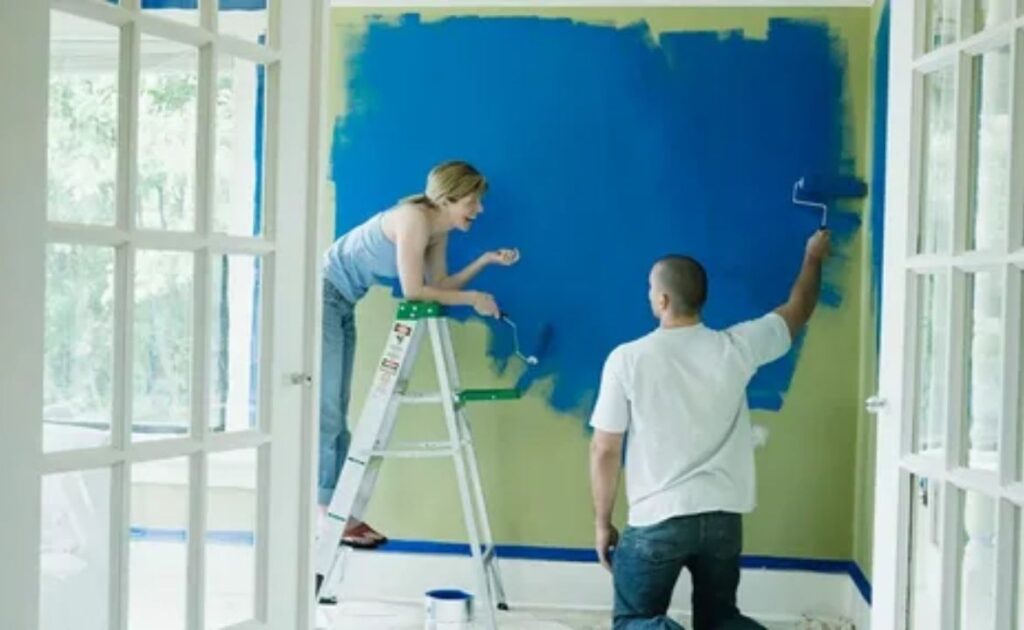
Paint is the undisputed classic for a reason. It’s reliable, versatile, and has been the go-to choice for homeowners for generations. Its enduring popularity comes from its simplicity and its ability to offer a clean, uniform look. With an almost infinite spectrum of colors and various finishes—from flat matte to high-gloss—paint provides a straightforward way to refresh a space. It acts as a perfect, subtle backdrop that allows your furniture, art, and accessories to take center stage.
The Great Debate: Wallpaper vs. Paint – A Head-to-Head Comparison
To make an informed decision, let’s pit these two options against each other across the most important categories.
Aesthetics and Visual Impact
· Paint: Paint provides a monolithic, solid block of color. It’s excellent for creating a minimalist aesthetic or for rooms where you want a simple, unobtrusive background. While techniques like sponging, stenciling, or creating an accent wall can add interest, they require significant skill and effort to achieve a high-end look. The finish (matte, eggshell, satin) can add subtle depth, but the overall effect is uniform.
· Watercolor Wallpaper: This is where wallpaper truly excels. It offers texture, pattern, and intricate detail that paint simply cannot replicate. A watercolor mural wallpaper can create a sense of depth and fantasy, transporting you to another place. Even a simple, repeating watercolor pattern adds a layer of sophistication and softness that feels custom and curated. If you want your walls to be the star of the show, wallpaper is the undisputed winner.
Cost Breakdown: Upfront vs. Long-Term
· Paint: The upfront cost of painting is significantly lower. A few gallons of quality paint, primer, brushes, and rollers are relatively inexpensive. This makes it the budget-friendly choice for a quick and easy update. However, paint is more susceptible to scuffs and fading, and you may find yourself needing to repaint a high-traffic room every 3-5 years to keep it looking fresh.
· Watercolor Wallpaper: The initial investment for wallpaper is higher. A single roll of high-quality watercolor wallpaper can cost as much as a gallon of paint or more, and you’ll need multiple rolls. Custom watercolor wall murals are a premium product with a price tag to match. However, modern wallpaper is incredibly durable and can last for 15 years or longer, making it potentially more cost-effective in the long run.
Application and Installation
· Paint: Most people consider painting a manageable DIY project. The process is straightforward: prep, prime, and paint. While it can be messy and time-consuming, it doesn’t require a great deal of specialized skill, just patience and a steady hand.
· Watercolor Wallpaper: Traditional wallpaper installation is more of an art form. It requires precise measurements, careful cutting, pattern matching, and smooth application to avoid bubbles and crooked lines. Many people opt to hire a professional. However, the rise of watercolor peel and stick wallpaper has dramatically lowered the barrier to entry, making it a viable DIY project for many. Still, for a large or complex job, especially with murals, a professional installer will guarantee a flawless finish.
Durability and Maintenance
· Paint: The durability of paint depends heavily on the finish. Gloss and semi-gloss paints are tough and easy to clean, making them suitable for kitchens and bathrooms. Matte and eggshell finishes, while beautiful, are more prone to scuffing and can be difficult to clean without leaving shiny spots. Touch-ups are possible but can be tricky to blend seamlessly once the original paint has aged.
· Watercolor Wallpaper: Don’t be fooled by its delicate appearance. Modern wallpapers, particularly vinyl-coated types, are surprisingly tough. They are designed to be scrubbable, stain-resistant, and can withstand the wear and tear of hallways, family rooms, and even kids’ rooms. A major tear is harder to fix than a paint chip, but for everyday durability, wallpaper often has the edge.
Making the Right Choice for Your Space
So, which should you choose? The answer depends on your goals, budget, and personal style.
Choose Watercolor Wallpaper if:
· You want to create a powerful statement or a dramatic feature wall.
· You desire texture, depth, and an artistic quality that paint can’t offer.
· You’re designing a “jewel box” room like a powder room, dining room, or nursery where you can make a bold impact.
· You’re a renter or like frequent changes (opt for watercolor peel and stick wallpaper).
· You’re investing in a long-term, durable finish for a high-traffic area.
Choose Traditional Paint if:
· You are working with a tight initial budget.
· You prefer a clean, minimalist, or uniform aesthetic.
· You plan on changing your wall color again in a few years.
· You need to cover a very large area or multiple rooms cohesively.
· Your walls have significant imperfections or heavy texture, as wallpaper requires a smooth, well-prepped surface.
The Hybrid Approach: The Best of Both Worlds
Remember, you don’t have to choose just one! One of the most effective design strategies is to combine paint and wallpaper. Use paint on three walls of a room in a complementary, neutral shade. Then, install a stunning watercolor wallpaper for walls on the fourth wall as a focal point. This approach gives you the “wow” factor of a designer wallpaper while keeping costs manageable. It’s the perfect compromise in the wallpaper vs. paint debate.
The Final Verdict
The choice between watercolor wallpaper and traditional paint is a choice between two different philosophies of design. Paint is the reliable, versatile workhorse that provides a beautiful foundation. Watercolor wallpaper is the showstopper, the piece of art that defines a room’s character.
By considering the factors of cost, durability, application, and—most importantly—the aesthetic you want to achieve, you can confidently decide which path to take. Whether you go with the simple elegance of a brushstroke or the dreamy wash of a watercolor wall mural, the goal is the same: to create a space that feels uniquely and beautifully yours.